
| Download Document |
 |

|
Terms to Know
- Landings: Landings are how you arrive to the visitor sites. Each site is visited by dinghy, also known as zodiac or panga.
- Panga: Panga is the Spanish term for dinghy or zodiac. You will hear this word often.
- Dry Landing: Upon arrival to the visitor site you will not have to enter the water when exiting the zodiac or dinghy.
- Wet Landing: Upon arrival to the visitor site you will exit the dinghy by entering the water first, then walking ashore.
- No Landing: There will be no landing because activity will consist of panga ride or snorkeling.
- Dinghy Ride: The dinghy ride is a simple ride on the water around the visitor area. This is done when there is no landing permitted or to get a better view of nearby wildlife or landscapes.
- Possible Activities: All activities are to be ultimately decided by the guide considering weather, sea conditions, and other factors.The activities listed in all itineraries are the final decision made by the Galapagos national park officials with the best interest of the islands in mind. These cannot be altered in any way.
Saturday to Saturday
Day 1 (Saturday)
ARRIVAL TO BALTRA & TWIN CRATERS / HIGHLANDS (SANTA CRUZ ISLAND)

Assistance will be provided upon your arrival by a Cormorant representative after passing through immigration and baggage claim. When ready, you will be transferred to the yacht. You will then be shown to your cabin where you will have some time to settle in before the welcome briefing and lunch.
On Santa Cruz you will see a unique ecosystem, the highlands, which consists of a humid cloud forest where giant tortoises dwell and birds find sanctuary. This ecosystem contrasts with the dry coastal areas of the islands and the beautiful white sandy beaches, characteristics of the volcanic Islands.
| THE TWIN CRATERS & HIGHLANDS | |
| Activities: | Hike (0.9 mi / 1 1/2 km) |
| Difficulty: | Easy /moderate |
| Type of Landing: | Dry landing |
| Highlights & Animals: | Pit craters, Scalesia Forest, giant cactus, lava lizards, giant tortoises, land birds: finches, warblers, flycatchers. |
Day 2 (Sunday)
TINTORERAS ISLET OR SIERRA NEGRA & TORTOISE BREEDING CENTER OR WETLANDS COMPLEX (ISABELA ISLAND)
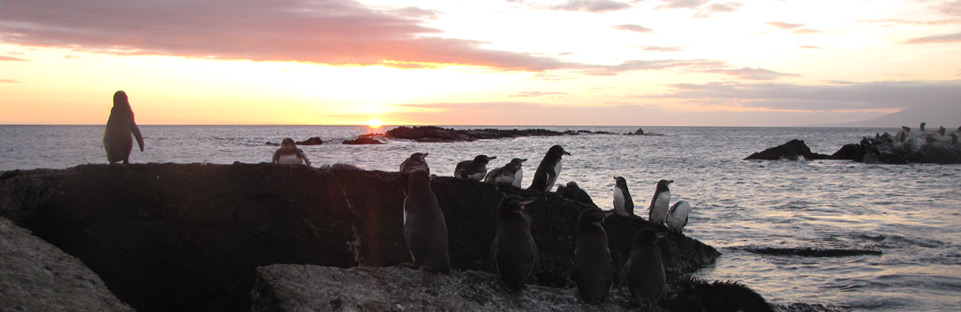
In the morning we will visit the Tintoreras Islet or Sierra Negra. Tintoreras is located a short distance from Puerto Villamil and is the home to a great variety of wildlife. Its turquoise, crystalline waters are inhabited by White-Tipped reef sharks, Galapagos penguins, marine turtles and sea lions. One of its beaches, surrounded by mangroves is one of the few sites where marine iguanas can reproduce successfully.
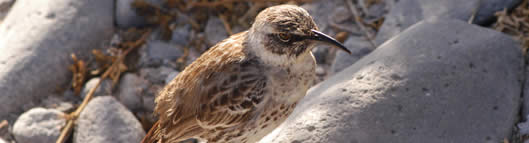
Sierra Negra boasts the largest volcanic basaltic caldera in Galapagos at 9 x 10km. The site offers impressive views and the opportunity to observe up to 7 species of finches and a rich display of vegetation. The north side of the caldera provides evidence of its most recent volcanic activity in 2005.
| TINTORERAS ISLET OR SIERRA NEGRA VOLCANO | |
| Possible Activities: | Dinghy ride, hiking, walking |
| Difficulty: | Easy/Moderate |
| Type of Landing: | None (Tintoreras), Dry Landing (Sierra Negra) |
| Highlights: | White-Tipped reef sharks, penguins, marine turtles, sea lions, marine iguanas, finches, basaltic caldera, and stunning views. |
TORTOISE BREEDING CENTER OR WETLANDS COMPLEX (ISABELA ISLAND)
The Wetlands of Isabela Island are located just outside of Puerto Villamil. The Wetlands consist of lagoons, swamps, and mangroves, and are home to a variety of unique bird species such as Common Stilts, Whimbrels, White-Cheeked Pintails, and Gallinules. The Wetlands can be visited on foot via a path that winds through the swamps.
| TORTOISE BREEDING CENTER OR WETLANDS COMPLEX | |
| Possible Activities: | Hiking |
| Difficulty: | Easy |
| Type of Landing: | Dry landing |
| Highlights & Animals: | Shore Birds, whimbrels, White-Cheeked Pintails, Common Stilts, lagoons, swamps, and giant mangroves. Interactive experiences with the tortoises in the breeding center. |
Day 3 (Monday)
MORENO POINT & ELIZABETH BAY (ISABELA ISLAND)

In the morning we will visit Moreno Point, located south west of Elizabeth Bay. Here, a dry landing onto what was once flowing lava is possible. The lava has left craters in its wake, which formed crystal tide pools. By looking into the pools, you can peer into another world, as the marine life drifts by. In the brackish pools of this area, you may see pink flamingos, White-Cheeked pintails, and Common gallinules. If you look carefully into the pools you may see White-Tipped reef sharks and some sea turtles.
| MORENO POINT | |
| Possible Activities: | Snorkeling, dinghy ride & hike (1.2 mi / 2km) |
| Difficulty: | Moderate/Difficult |
| Type of Landing: | Dry Landing |
| Highlights & Animals: | Flamingos, gallinules, Pintail ducks, turtles, and White-Tipped reef sharks. |
The afternoon visit will take us to Elizabeth Bay, a secluded space lacking any landing sites. We will take a traditional 'panga', or dinghy ride, passing the red mangroves and amongst the wildlife of the lively bay. Elizabeth is known for its marine life; you will probably see sea turtles and rays skimming the surface of the water. You may also see the Brown pelicans diving for fish, Galapagos penguins, Blue-footed Boobies and even possibly spot humpback whales.
| ELIZABETH BAY | |
| Possible Activities: | Two-hour dinghy ride |
| Difficulty: | Easy |
| Type of Landing: | No landing |
| Highlights: | Mangrove forest (unique in Galapagos), sea turtles, penguins, rays, herons, and sea lions. |
Day 4 (Tuesday)
MANGLE POINT (FERNANDINA ISLAND) & URBINA BAY (ISABELA ISLAND)

In the morning we will head for Mangle Point. A visit to Mangle Point allows visitors to witness the amazing views and wildlife on the Coast of Fernandina Island. This is a small inlet on Fernandina's coast where you can snorkel to your hearts delight and watch playful sea lions, curious penguins, and also catch a glimpse of where flight less cormorants reside.
| MANGLE POINT | |
| Possible Activities: | Snorkeling |
| Difficulty: | Easy |
| Type of Landing: | No Landing |
| Highlights & Animals: | Flightless Cormorant, marine iguanas, A'A lava, sea lions, and penguins. |
In the afternoon, we will land at Urbina Bay, which presents some fascinating geological formations. In 1954, an uplift from the sea formed the bay; which has been characterized by the resulting terrestrial coral reef ever since. Expect to see stingrays and sea turtles swimming near the surface of the water, along with Flightless cormorants, pelicans, and marine iguanas. You will be dazzled by the breathtaking view of Volcano Alcedo.
| URBINA BAY | |
| Possible Activities: | Snorkeling, dinghy ride & hike, 2 trails: Short (0.6 mi / 1 km), Long (1.9 mi / 3km) |
| Difficulty: | Easy/Moderate |
| Type of Landing: | Wet Landing |
| Highlights & Animals: | Land iguanas (the biggest in Galapagos), hawks, coral reef, and giant tortoises. Snorkeling: you may see turtles, rays, and tropical fish. |
Day 5 (Wednesday)
ESPINOSA POINT (FERNANDINA ISLAND) & VICENTE ROCA POINT (ISABELA ISLAND)
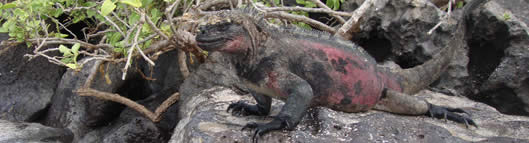
Fernandina Island: No foreign species have ever invaded this island and therefore it is one of the world's most pristine island ecosystems. Fernandina is the youngest island in Galapagos. Access to this site is extremely restricted by the Galapagos National Park and you will be one of those very lucky visitors. The volcano "La Cumbra", dominates the land space with lava fields reaching the ocean.
Crossing the Bolivar Channel that divides Isabela and Fernandina Islands, we will land at Espinosa Point. After walking past a colony of marine iguanas and a group of sea lions, we'll reach the island's highlight: the Flightless cormorant nesting site. This area also provides a great opportunity to see the Galapagos Hawk.
| ESPINOZA POINT | |
| Possible Activities: | Hike (1.2 mi / 2 km) |
| Difficulty: | Moderate |
| Type of Landing: | Dry and slippery at low tide |
| Highlights & Animals: | Flightless cormorant, marine iguanas, A'A lava, sea lions, penguins, and the active volcano "La Cumbre". |
In the afternoon we will visit Isabela Island once again to Vicente Roca Point. Comprised of two separate coves, this site is a large bay with spectacular sea life. Keep an eye out for seahorses, sea turtles, and the strange yet fascinating Mola-mola sunfish.
| VICENTE ROCA POINT | |
| Possible Activities: | Snorkeling, dinghy ride |
| Difficulty: | Easy/Moderate |
| Type of Landing: | No Landing |
| Highlights: | Penguins, Blue-Footed boobies, terns, Nazca Boobies, and two types of sea lions, sea turtles, rays, the Mola-mola sunfish, and puffer fish. |
Day 6 (Thursday)
EGAS PORT & BUCCANEER COVE / ESPUMILLA BEACH (SANTIAGIO ISLAND)
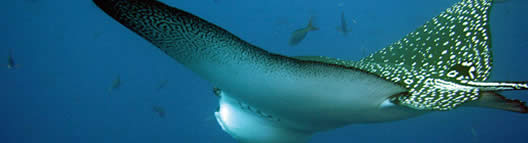
Egas Port is a well-known site in the Galapagos Islands that is also known as James Bay on the western side of Santiago Island. There are trails that lead to tide pools with lava lizards scattering along the trail and remains of an old salt mine operation that was eventually unsuccessful can be seen on one of the trails. Fur seals and marine birds can be seen nearby and snorkeling can be enjoyed.
| EGAS PORT | |
| Possible Activities: | Snorkeling, hiking (1.25km/2mi) |
| Difficulty: | Easy/Moderate |
| Type of Landing: | Wet Landing |
| Highlights & Animals: | Unique trails abundant with lava lizards; Galapagos Hawks, fur seals and other marine birds; Distinctive underwater formations, marine iguanas, reef sharks, turtles and rays while snorkeling. |
Years ago Buccaneer Cove was a safe haven where pirates in the 1600 and 1700's would stake out on the Northwestern side of Santiago Island. Sea turtles now take the pirates place and dig their nests for their eggs near the Mangrove trees. It is a great location for snorkeling and many marine birds and sea lions can be found here.
| BUCCANEER COVE / ESPUMILLA BEACH | |
| Possible Activities: | Snorkeling, hiking |
| Difficulty: | Easy/Moderate |
| Type of Landing: | Wet Landing |
| Highlights & Animals: | Historical site, rock formations; tropical fish, sting-rays, turtles while snorkeling. |
Espumilla Beach is another famous visitor site in the Galapagos Islands. After a wet landing, find yourself on a large beach where the guide will lead you on a path through a Mangrove Forest. After weaving through the Mangroves, find an inland lake where flamingos, pintail ducks and stilts reside. The site is mostly inhabited by flamingos that nest and feed in this location.
| ESPUMILLA BEACH | |
| Possible Activities: | Snorkeling, swimming, hiking |
| Difficulty: | Easy/Moderate |
| Type of Landing: | Wet Landing |
| Highlights & Animals: | Mangrove Forest hike, flamingos, pintail ducks, stilts, other marine birds. Snorkeling and swimming at the beach. |
Day 7 (Friday)
EL BARRANCO & DARWIN BAY (GENOVESA ISLAND)

The morning takes us to El Barranco, also known as Prince Phillip's Steps, whose steep, rocky path will lead you up 25 meters (82 ft) to a cliff-face. After marveling at the view you will have the opportunity to take a (0.9 mi / 2 km) trek through Palo Santo vegetation. Here you will be dazzled by all the birds. Red-footed Boobies, Short-Eared Lava Owls, Galápagos Swallows, and Galápagos Doves are abundant.
| EL BARRANCO | |
| Possible Activities: | Hike (0.9 mi / 2 km) |
| Difficulty: | Moderate |
| Type of Landing: | Dry, difficult landing |
| Highlights & Animals: | Red-footed Boobies, Short-Eared Lava Owls, Storm-Petrels, Galapagos Doves. |
Our afternoon visit will take us to the beach at Darwin Bay. This white-sand coral beach heads a (1/2 mi - 3/4 km) trail that winds down through mangroves that are filled with land birds. You may see Nazca Boobies, Red-Footed Boobies, and Swallow-Tailed Gulls. Further down the path, you may see sea lions playing in tidal pools. You will arrive to a cliff-side and as the spectacular views soak in, the Boobies and iguanas will keep you company.
| DARWIN BAY | |
| Possible Activities: | Hike (1/2 mi / 3/4 km), snorkeling, kayaking & dinghy ride |
| Difficulty: | Easy/Moderate |
| Type of Landing: | Wet Landing |
| Highlights & Animals: | Nazca Boobies, Red- footed Boobies, Swallow-Tailed Gulls, mangroves, and white-sand coral beach. Snorkeling: you may see rays, colorful reef fish and hammerhead sharks. |
Day 8 (Saturday)
NORTH SEYMOUR ISLAND & DEPARTURE

The morning visit will take us to North Seymour Island. Galapagos Sea Lions, Blue-footed Boobies and Magnificent Frigate birds are abundant on North Seymour Island. The island was formed by series of submarine lavas containing layers of sediment that were uplifted by tectonic activity. The island is characterized by its arid vegetation zone.
| NORTH SEYMOUR | |
| Activities: | Snorkeling, dinghy ride & hiking (1.5 mi/2.5 km) |
| Difficulty: | Moderate/difficult |
| Type of Landing: | Dry landing |
| Highlights & Animals: | Land & marine iguanas, frigate birds, Blue-footed Boobies, sea lions, snorkeling: Rays, reef shark, fish, garden eels |
Transfer to Baltra Airport
Your cruise has officially come to an end. We hope you enjoyed your Galapagos Cruise! We will now transfer you to your scheduled departure from Baltra Airport to mainland Ecuador. Safe travels!
Important: Itineraries and activities subject to change without prior notice. Depending on weather conditions and water currents, some wildlife described above may not be visible. The wildlife described is not guaranteed to be seen during your visit. Please remember to respect your distance between any and all wildlife. Please stay on marked trails and heed the directions of your Naturalist Guide. |
