 |
Saturday - Bartholomew Island |
| |
Arrival in South Seymour (Baltra) Island and transfer to the cruiser
|
| pm: |
Bartholomew Island
It
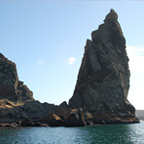
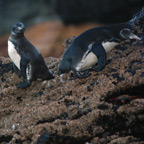
is the home to both Pinnacle Rock and the most famous view in the Galapagos. Climbing the 472-foot (144-meter) summit will reward visitors with panoramic views of neighboring islands along with varied lava formations, volcanic peaks and a moon-like landscape. Along the sandy beaches, you may see white-tipped reef sharks swimming close to the shore, or have the chance to swim alongside the Galapagos Penguin. |
|
» Back to top
|
 |
Sunday - Isabela Island/ Fernandina Island |
| am: |
Vicente Roca Point
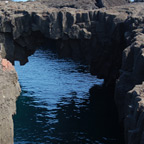
The largest and one of the most volcanically active islands, Isabela is often considered a prize jewel among the gems of the Galapagos. Extremely diverse, Isabela provides habitat for five subspecies of giant tortoise - one for each of its five volcanoes. We will visit Punta Vicente Roca which has beautiful volcanic scenery like the turquoise coves, surrounded by amazing lava formations and an expansive sea cliff.
|
| pm: |
Espinosa Point
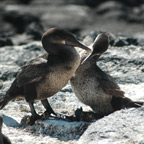
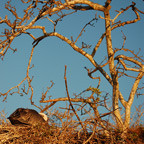
Fernandina is the archipelago�s youngest island. No foreign species has ever invaded, and her pristine ecosystem is a point of pride. The La Cumbre volcano, with its lava fields spreading out to the sea, dominates the landscape. We land at Punta Espinosa. There, we�ll pass a colony of marine iguanas, then a group of sea lions, before arriving at the island's highlight - the Flightless Cormorant nesting site.
|
|
» Back to top
|
 |
Monday - Santiago Island/Rabida Island |
| am: |
Puerto Egas
Puerto Egas (South James Bay) is on the northwest side of Santiago Island. This is one of the few places where you can see the Galapagos Fur Seal. We will begin the day with an easy walk along the shore amongst the Sally Lightfoot Crabs, and a variety of other tiny intertidal creatures. The sleek lava and black sand beaches will induce your wonder, and focus your photographer�s eye. Those snorkeling around the beach will behold a broad array of marine life.
|
| pm: |
Playa Roja
Rabida Island (Jervis) is a bird-watcher�s delight. You will see some of the rarest species here, in abundant flocks; including nine varieties of Finches, along with Large-Billed Flycatchers, Galapagos Hawks and Brown Pelicans. The trail starts along the striking, red sand beach, and weaves its way to the top of a hill where you will have an encompassing view of the surrounding landscape.
|
|
» Back to top
|
 |
Tuesday - San Cristobal Island /La Galapaguera |
| am: |
Isla Lobos
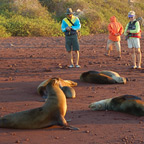
�Isla Lobos� translates roughly to �Sea Lion Island�, and is a name well-deserved. Here you will see the massive animals tease one another, lounge in the sun, and leap into the sea. This island is also a great place for snorkeling; and with luck, we'll find ourselves swimming amongst the sea lions themselves.
|
| pm: |
La Galapaguera or Interpretation Center
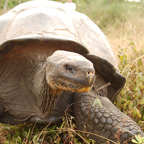
The Galapaguera allows you to see the Giant Tortoises in their natural environment. Marvel at the tiny babies, or the gentle giants, which, at four-foot, are probably as long as some of your friends are tall. Given the right conditions, the option to visit the Interpretation Center in San Cristobal is available
|
|
» Back to top
|
 |
Wednesday - Española Island |
| am: |
Su�rez Point
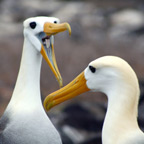
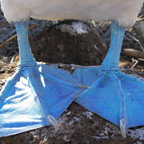
Often listed as a Galapagos 'favorite visitor site�, this is a great place to see Blue-Footed Boobies and the Waved Albatross. Like most Galapagos wildlife, the Boobies are so accustomed to life without predators, that they will hardly note your existence. Be prepared for an up-close look at their families, and marvel at the elegance with which they glide through the air. You can also see the famous blowhole, which spurts water sixty-five feet (twenty meters) high. Bring your camera.
|
 |
|
| pm: |
Gardner Bay
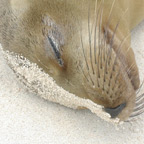
Espa�ola Island is where nearly all of the world's twelve-thousand pairs of waved albatrosses nest and breed. Gardner Bay includes a beautiful, white sand beach where you can nap near a sea lion colony. This is a prime spot for snorkeling or relaxing on the picturesque beach as the clouds float by.
|
|
» Back to top
|
 |
Thursday - Floreana Island |
| am: |
Champion & Cormorant Point
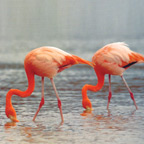
Our trail will take us along a beach where the sea lions bask in the sun. We'll make our way behind white and black mangroves, and come upon a brackish water lagoon where the vivid pink flamingos pose. Then we'll head up to a remarkable look-out point before taking in the white sand beach where the sea turtles nest. The nearby Champion Islet is widely considered to be one of the best snorkeling and diving sites in the Galapagos.
|
|
» Back to top
|
 |
pm: |
Post Office Bay
At Post Office Bay, eighteenth century whalers used a barrel as an unofficial mail drop. In those times ships were often away from home for two or more years at a time. Ships on their outward journeys would leave letters and ships returning home would pick them up and bring them to their homeland. Many Galapagos visitors continue the custom, and you may leave, or retrieve, a letter as well. No postage required.
|
|
» Back to top
|
 |
Friday - Santa Cruz Island |
| am: |
Charles Darwin Research Station
At the Charles Darwin Research Station, you will get to meet what the Guiness Book of World's Records has dubbed 'The Rarest Living Creature', Lonesome George is the last of the Pinta Giant Turtles. In the walk-in enclosure, you can mingle with the adult Giant Tortoises, while the baby tortoise house will allow you to meet little giants, aged four years and younger. Scientists are available to share how they work to keep Galapagos thriving. Afterwards you will have an opportunity to look around Puerto Ayora for souvenirs. |
|
» Back to top
|
 |
pm: |
Isla Plaza
This island is a very special place in the Galapagos; you will find a big colony of Sea Lions, Land Iguanas, and a variety of different bird species. There is a fantastic, cliff-side view of the ocean, and the fascinating Opuntia Cacti forest.
|
|
» Back to top
|
 |
Saturday - North Seymour |
| am: |
North Seymour is a low-lying island with a very large population of Blue-Footed Boobies. It is also home to the largest colony of the magnificent Frigate Birds, whose male representative boasts an amusing red pouch. The first half of our trail is sandy, but as a testament to the diversity of the islands, the second half is rocky (be sure to bring appropriate shoes).
As this point, we'll head back to the airport for your flight to the mainland. |
|
» Back to top
|

 普通话
普通话
 M/C Nina Itinerary