
B2B Access > 15 day cruise 2011-2012

Saturday to Saturday
Isabela, Fernandina, Española, Central
and Genovesa Islands.
Day 1 (Saturday)
FROM QUITO OR GUAYAQUIL TO BALTRA (GALAPAGOS)
CHINESE HAT

Assistance will be provided for you when you arrive to the airport by one of our representatives after you have landed.
You will arrive at Baltra Island in the morning. After passing through immigration and baggage claim you will be met by Ocean Spray staff and transferred to the yacht. You will be shown to your cabin where you will have some time to settle in before lunch and a welcome briefing.
The afternoon visit to Chinese Hat, offers rare, up close viewing of Galapagos wildlife and well preserved remnants of fragile volcanic rock that can't be found in such a unique condition anywhere else. The islet is home to a colony of sea lions on the white coral sand beach. Here you can see American Oystercatchers, Galapagos Penguins swimming along the shores, and Sally-Lightfoot Crabs in bright contrast to the dark volcanic rock.
| CHINESE HAT | |
| Possible Activities: | A hike of 400 meters starting at the beach rising up to 160 feet exploring the different volcanic remnants and rare plant life along with amazing views; Snorkeling among White-Tipped Reef Sharks and various tropical fish. |
| Difficulty: | Moderate |
| Type of Landing: | Wet Landing |
| Highlights & Animals: | White-cheeked Pintail Ducks, colorful fish, sea lions, Brackish Water Lagoon, penguins, and the Galapagos Hawk. |
Day 2 (Sunday)
ISABELA ISLAND: VICENTE ROCA POINT &
FERNANDINA ISLAND: ESPINOSA POINT

Isabela Island: The largest in the archipelago, this seahorse-shaped island is also one of the youngest and most volcanically active.
The morning visit is to Vicente Roca Point. Comprised of two separate coves, this site is a large bay with spectacular sea life. Keep an eye out for seahorses, sea turtles, and the strange yet fascinating Mola-mola (or pacific sunfish).
| VICENTE ROCA POINT | |
| Possible Activities: | Snorkeling & dinghy ride |
| Difficulty: | Easy / Moderate |
| Type of Landing: | No Landing |
| Highlights & Animals: | Penguins, Blue-footed Boobies, Terns, Nazca Boobies, two types of sea lions, penguins, Blue-footed Boobies, terns, Nazca Boobies, two types of sea lions, sea turtles, rays and puffer fish. |
Fernandina Island: No foreign species have ever invaded Fernandina Island and therefore it is one of the world's most pristine island ecosystems. Fernandina is the youngest island in Galapagos. Access to this site is extremely restricted by the Galapagos National Park and you will be one of those very lucky visitors. The volcano "La Cumbre" dominates the landspace with lava fields reaching the ocean.
Crossing the Bolivar Channel that divides Isabela and Fernandina Islands, we will land at Espinosa Point. After walking past a colony of marine iguanas and a group of sea lions, we'll reach the island's highlight: the Flightless Cormorant nesting site. This area provides a great opportunity to see the Galapagos Hawk.
| ESPINOZA POINT | |
| Possible Activities: | Hike (1.2 mi / 2 km) |
| Difficulty: | Moderate |
| Type of Landing: | Dry and Slippery at Low Tide |
| Highlights & Animals: | Flightless Cormorant, marine iguanas, A'A Lava, sea lions, penguins, and active Volcano "La Cumbre". |
Day 3 (Monday)
ISABELA ISLAND: TAGUS COVE & URBINA BAY

The morning visit, including Tagus Cove's cliff-side gallery, provides a clear view of pirate graffiti dating back to 1836. The contrast between vandalism and the pristine environment is thought provoking. Up the (1.25 mi / 2 km) hike through lava formations, we will see stunning views of the surrounding slopes and volcanoes, making our way to Darwin Lake. This salt-water crater-lake may have been filled with a tidal wave brought on by a volcanic eruption.
| TAGUS COVE | |
| Possible Activities: | Long hike, snorkeling, dinghy ride |
| Difficulty: | Moderate/ Difficult |
| Type of Landing: | Dry Landing |
| Highlights & Animals: | Penguins, Blue Flightless Cormorants, Darwin Volcano & Lake |
In the afternoon, we will land at Urbina Bay which presents some fascinating geological formations. In 1954, an uplift from the sea formed the bay which has been characterized by the resulting terrestrial coral reef ever since. Expect to see stingrays and sea turtles swimming near the surface of the water, along with Flightless Cormorants, pelicans, and marine iguanas. You will be dazzled by the breathtaking view of Volcano Alcedo, with the possibility to see land iguanas and giant tortoises in the wild.
| URBINA BAY | |
| Possible Activities: | Snorkeling, dinghy ride & hike, 2 trails: short (0.6 mi / 1 km), long (1.8 mi / 3km) |
| Difficulty: | Easy / Moderate |
| Type of Landing: | Wet Landing |
| Highlights & Animals: | Land iguanas (the biggest in Galapagos), hawks, coral reef, giant tortoise, turtles, rays, and tropical fish. |
Day 4 (Tuesday)
ISABELA ISLAND: ELIZABETH BAY & MORENO POINT

The morning visit will take us to Elizabeth Bay, a secluded space lacking any landing sites. We will take a traditional 'panga' ride or dinghy ride, passing the red mangroves and amongst the wildlife of the lively bay. Elizabeth is known for its marine life; you will probably see sea turtles and rays skimming the surface of the water. You may also see Brown Pelicans diving for fish, penguins, Blue-footed Boobies and possibly spot humpback whales
| ELIZABETH BAY | |
| Possible Activities: | Two-hour dinghy ride |
| Difficulty: | Easy |
| Type of Landing: | No Landing |
| Highlights & Animals: | Mangrove Forest (unique in Galapagos), sea turtles, penguins, rays, herons, and sea lions. |
In the afternoon we will visit Moreno Point, located south west of Elizabeth Bay. Here, a dry landing onto what was once flowing lava is possible. The lava has left craters in its wake, which formed crystal tide pools. By looking into the pools, you can peer into another world, as the marine life drifts by. In the brackish pools of this area, you may see pink flamingos, White-Cheeked Pintails, and Common Gallinules. If you look carefully into the pools you may see white-tip reef sharks and some sea turtles.
| MORENO POINT | |
| Possible Activities: | Snorkeling, dinghy ride & hike (1.2 mi / 2km) |
| Difficulty: | Moderate / Difficult |
| Type of Landing: | Dry Landing |
| Highlights & Animals: | Flamingoes, gallinules, Pintail ducks, turtles, and white tip reef sharks. |
Day 5 (Wednesday)
SANTA CRUZ – CHARLES DARWIN STATION & HIGHLANDS

In the morning we start at the Charles Darwin Station - Breeding Center "Fausto Llerena" home to tortoises ranging from 4-inches (new hatchlings) to 4-feet long. Here you will observe the various sub-species of tortoises interacting with each other, and possibly with you. Many of the older tortoises are accustomed to humans. The babies are only kept until they are about four years old, or large enough to survive in the wild. These conservation efforts continue to be extremely successful.
| CHARLES DARWIN RESEARCH STATION | |
| Possible Activities: | Walking |
| Difficulty: | Easy |
| Type of Landing: | Dry Landing |
| Highlights & Animals: | Giant Tortoises, land and marine iguanas, variety of birds. |
Here at the Highlands, you can walk along a path, observing the hills, ferns, volcanoes, and rich wildlife. This area is home to giant tortoises, forest, mockingbirds, Bahama ducklings, White-cheeked Pintail ducklings, Darwin finches, and many other species. You will come upon the underground lava tubes, which are more than one kilometer (half a mile) long. Local guides will provide information and flashlights. Walking through the lava tubes is a unique and surreal experience.
| HIGHLANDS | |
| Possible Activities: | Walking |
| Difficulty: | Moderate |
| Type of Landing: | Dry Landing |
| Highlights & Animals: | Wild Turtles, Tortoises Breeding Center |
Day 6 (Thursday)
NORTH SEYMOUR ISLAND & SANTA FE
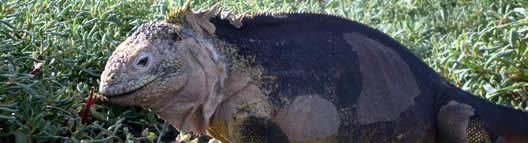
Galapagos Sea Lions, Blue-footed Boobies and Magnificent Frigatebirds are abundant on North Seymour Island. The island was formed by a series of submarine lavas containing layers of sediment that were uplifted by tectonic activity. The island is characterized by its arid vegetation zone.
| NORTH SEYMOUR | |
| Possible Activities: | Snorkeling, dinghy ride & hike (1.5 mi / 2 ½ km) |
| Difficulty: | Moderate / Difficult |
| Type of Landing: | Dry Landing |
| Highlights & Animals: | Land and marine iguanas, frigate birds, Blue-footed Boobies, and sea lions. Great snorkeling: Rays, reef shark, fish, and garden eels. |
Our afternoon visit is to Santa Fe Island. Santa Fe (Barrington) is home to the small picturesque bay and anchorage on the islands northeast coast. The bay has two visitor trails, one leading to a scenic viewpoint atop a cliff and the other spanning from a small beach to a tall prickly pear cactus forest.
| SANTA FE ISLAND | |
| Possible Activities: | Hiking |
| Difficulty: | Moderate |
| Type of Landing: | Dry Landing |
| Highlights & Animals: | Land iguanas and giant tunas. |
Day 7 (Friday)
ESPAÑOLA ISLAND: GARDNER BAY/ OSBORN ISLET

Española Island is the southernmost island of the Galapagos and is the breeding site of nearly all of the Waved Albatrosses in the entire world. Española is densely populated with mockingbirds, Blue-footed and Nazca Boobies, Darwin finches, Galapagos Doves, hawks, marine iguanas, and loads of sea lions.
In the morning, we will start at Suarez Point on a trail where you will have the chance to see Blue-footed Boobie, albatrosses (From April to December) and Nazca Boobies. We will also visit a beautiful site on the ocean front where there is a cliff that the large albatrosses use as a launching pad! You'll also have the chance to see the famous blowhole that spurts water into the air. The landscape is great for photography.
| SUAREZ POINT | |
| Possible Activities: | Hike (1.8 mi / 3 km) |
| Difficulty: | Difficult |
| Type of Landing: | Dry landing |
| Highlights & Animals: | Hood Mockingbird, Nazca Boobies, Waved Albatross, Red-billed Tropicbirds, lava lizards, Galapagos Hawk, Blue-footed Boobies, and the famous blow hole. |
In the afternoon, we will visit the spectacular Gardner Bay & Osborn Islet. After landing, you can walk across a lovely white sand beach amongst a busy sea lion colony or dive into the water to swim with sea lion pups. It is the breeding site of nearly all of the world's 12,000 pairs of Waved Albatrosses.
| GARDNER BAY & OSBORN ISLET | |
| Possible Activities: | Snorkeling, dinghy ride, kayaking, and short hike of (0.6 mi / 1km) |
| Difficulty: | Easy |
| Type of Landing: | Wet Landing |
| Highlights & Animals: | White sandy beach, sea lions, and mockingbirds. |
Day 8 (Saturday)
SAN CRISTOBAL ISLAND: INTERPRETATION CENTER/
GALAPAGUERA & LOBOS ISLAND/KICKER ROCK

In the morning we will visit the Interpretation Center or Galapaguera on San Cristobal Island.
The Interpretation Center is located on San Cristobal Island. The center was donated by the Spanish government and inaugurated by the Prince of Spain in 1998. This center focuses on the interaction between humans and the process of the "natural history laboratory", demonstrating that a harmonious relation between human beings and nature is possible.
Cerro Colorado (Galapaguera) is a new visitor site in the northeast part of San Cristobal Island and can now be reached in roughly one hour by road from Puerto Baquerizo Moreno. On the trees and shrubs surrounding the site, you may see land birds like warbler, finches and mockingbirds, and on the trails, giant tortoises. They live there wild but in a protected area to assure their survival by sealing them off from introduced predators, like pigs and goats. Once the tortoise perceives danger, it goes into its defensive stance, retreating into its hard shell.
| INTERPRETATION CENTER/GALAPAGUERA | |
| Possible Activities: | Short hike (less than 0.6 mi / 1 km) |
| Difficulty: | Easy |
| Type of Landing: | Dry Landing |
| Highlights Interpretation Center: | Interpretation Center: Human History and Interpretation of the Galapagos Ecosystem, giant tortoises in captivity and the highlands of San Cristobal. |
| Highlights Galapaguera: | Giant tortoises in captivity, highlands of San Cristóbal |
In the afternoon we will visit Lobos Island. The name of this island means "Sea Lion Island". This appropriately named island is ripe with noisy, frolicking, jolly sea lions who will welcome you to their home with open fins! This island also offers great snorkeling opportunities as well as the chance to see Blue-Footed and Nazca Boobies.
| LOBOS ISLAND | |
| Possible Activities: | Short hike (less than 0.6 mi / 1km), dinghy ride and/or snorkeling. |
| Difficulty: | Easy/Moderate |
| Type of Landing: | Dry Landing |
| Highlights & Animals: | Snorkeling with sea lions, frigate birds, and Blue-footed Boobies. |
A dinghy ride and snorkeling around Kicker Rock (Leon Dormido) can be also be done in the afternoon. Known as the Sleeping Lion because of its resemblance, this site is located off the coast of San Cristobal. There are remains of a lava cone eroded by the sea, two vertical rocks rising 500 feet above the ocean. This Galapagos Islands natural monument has become a favorite sight for cruises due to the many tropicbirds, frigate birds and boobies that fill the surrounding air. Beneath the sea the crystal waters offer a brilliant show of colorful tropical fish and invertebrates.
| KICKER ROCK | |
| Possible Activities: | Snorkeling & dinghy ride |
| Difficulty: | Easy |
| Type of Landing: | No Landing |
| Highlights & Animals: | Deep water snorkeling: Sharks, tropical fish, turtles, manta rays (occ.), hammerhead sharks, and spectacular rock formations. Sea Birds: Blue-footed Boobies, Nazca Boobies & frigate birds. Second best place to snorkel in the Galapagos. |
Day 9 (Sunday)
SAN CRISTOBAL ISLAND – PITT POINT & WITCH HILL
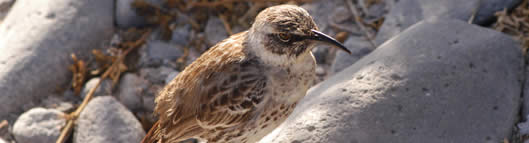
We will visit Pitt Point in the morning. Pitt Point holds its own as the northeastern most site on San Cristobal. After an easy hike, you will be rewarded with a unique treat. Herein lays the only nesting site which hosts all species of Galápagos Boobies. Photographers will be thrilled with this intimate natural experience. The attractive volcanic tuff formations will have geologists and laymen alike imagining the forces of nature that possessed the Earth to create this land.
| PITT POINT | |
| Possible Activities: | Dinghy ride, snorkeling, kayaking & hike (1.5 mi / 2 ½ km) |
| Difficulty: | Moderate/Difficult |
| Type of Landing: | Wet Landing |
| Highlights & Animals: | Wonderful landscape, sea lion colony, and three possible species of Boobies. |
In the afternoon we'll visit Witch Hill (Cerro Brujo) where you will explore one of the nicest beaches in the Galápagos. You'll be tantalized by the texture and sight of the powdered, soft white sand. With a colony of sea lions and Blue-footed Boobies, this scenic place is bustling with life. Just beyond the beach is a lagoon, thriving with Egrets and Great Blue Herons. The turquoise water and abundant marine life will invite you to snorkel their midst.
| WITCH HILL | |
| Possible Activities: | Hike, dinghy ride, snorkeling & kayaking |
| Difficulty: | Easy |
| Type of Landing: | Wet Landing |
| Highlights & Animals: | Beautiful rock formations, sea lions, shore birds, and land birds such as finches and mockingbirds. Snorkeling: Spot tropical fish, anemones, and sponge coral. |
Day 10 (Monday)
FLOREANA: POST OFFICE BAY & CORMORANT POINT/DEVIL'S CROWN

We will visit two sites on Floreana Island. In the morning, we will visit the famous Post Office Bay. You will land on a beach and head to a spot where 18th century whalers placed a wooden barrel for use as an unofficial mail box. The custom continues to this day with Galapagos visitors. So, don't forget your postcards, and don't be surprised if the post card arrives to its destination before you get home!
| POST OFFICE BAY | |
| Possible Activities: | Short hike (less than 0.6 mi / 1km) & snorkeling |
| Difficulty: | Easy |
| Type of Landing: | Wet Landing |
| Highlights & Animals: | Barrel Post Office and beautiful sandy beach. |
In the afternoon, we will head to Cormorant Point. Here you can enjoy a hike to a salt-water lagoon which is home to flamingoes. You'll also be amazed by the green colored beach, caused by a high percentage of olivine crystals in the sand. You will also get to swim in the crystal clear waters of Devil's Crown. This extinct volcano peaks out of the waters just off of Floreana's coast and offers a magnificent snorkeling experience.
| CORMORANT POINT/DEVIL'S CROWN | |
| Possible Activities: | Snorkeling & dinghy ride & hike (1.2 mi / 2km) |
| Difficulty: | Easy |
| Type of Landing: | Wet Landing |
| Highlights: | Flamingoes, green olivine crystal beach, and Devil's Crown: The best snorkeling site in Galapagos Islands with sharks, rays, rock formations, and lots of tropical fish. |
Day 11 (Tuesday)
SANTA CRUZ ISLAND: BLACK TURTLE COVE & BARTHOLOMEW ISLAND: PINNACLE ROCK

Black Turtle Cove is located on the north side of Santa Cruz Island and is only accessible by boat and with a guide. This shallow inlet is surrounded by mangroves and provides natural protection for a variety of marine life, attracting the vulnerable juveniles of many species. Below the surface of the water, you can see both black-tip and white-tip reef sharks, sea turtles, golden cow-nose rays, spotted eagle rays, and an occasional hammerhead shark. Pelicans and Boobies hunt here, diving gracefully into the water.
| BLACK TURTLE COVE | |
| Possible Activities: | 2 hour dinghy ride |
| Difficulty: | Easy |
| Type of Landing: | No Landing |
| Highlights & Animals: | Hammerhead sharks, rays, sea turtles, and sea birds. |
Our afternoon visit includes Bartholomew Island, home of the famous Pinnacle Rock. Bartholomew consists of an extinct volcano with a variety of red, orange, black and even green volcanic formations. We will take a trail of stairs to the summit of the volcano (about 30 or 40 minutes) where you will enjoy one of the best views of the islands! You will also visit a small, beautiful beach, surrounded by the only vegetation found on this barren island. The beach is perfect for snorkeling where you may even see the Galapagos penguins.
| BARTHOLOMEW | |
| Possible Activities: | Dinghy, snorkeling, and hike (1.2 mi / 2 km) |
| Difficulty: | Moderate / Difficult. Walk up to the top of volcano (114 meters, 375 wooden steps). |
| Type of Landing: | Dry and Wet Landing |
| Highlights & Animals: | Pinnacle Rock, panoramic view, moonlike landscape, penguins, pioneer plants, Lava Cactus. |
Day 12 (Wednesday)
GENOVESA ISLAND: DARWIN BAY & EL BARRANCO
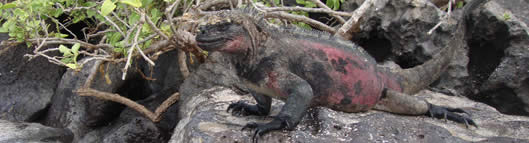
Our morning visit will take us to the beach at Darwin Bay. This white-sand coral beach heads a (1/2 mi / 3/4 km) trail that winds through mangroves that are filled with land birds. You may see Nazca Boobies, Red-footed Boobies, and Swallow-tailed Gulls. Further down the path, you may see sea lions playing in tidal pools. You will arrive cliff-side and can let the spectacular views soak in, while the Boobies and iguanas keep you company.
| DARWIN BAY | |
| Possible Activities: | Hike (1/2 mi / 3/4 km), snorkeling, kayaking & dinghy ride |
| Difficulty: | Easy/Moderate |
| Type of Landing: | Wet Landing. |
| Highlights & Animals: | Nazca Boobies, Red-footed Boobies, Swallow-tailed Gulls, Mangroves, Coral Pebbles Beach. Snorkelling: Rays, colourful reef fish and hammerhead sharks. |
The afternoon takes us to El Barranco or The Cliff, also known as Prince Phillip's Steps, whose steep, rocky path will lead you up 25 meters (82 ft) of cliff-face. After marveling at the view you will have the opportunity to take a (0.9 mi / 2 km) trek through Palo Santo vegetation. Here you will be dazzled by all the birds: Red-footed Boobies, Short-eared Lava Owls, Galapagos storm petrels and Galapagos Doves.
| EL BARRANCO | |
| Possible Activities: | Hike (0.9 mi / 2 km) |
| Difficulty: | Moderate |
| Type of Landing: | Dry/ Difficult Landing At Times |
| Highlights: | Red-footed Boobies, Short-eared Lava Owls, storm-petrels, and Galapagos doves. |
Day 13 (Thursday)
SANTIAGO ISLAND: ESPUMILLA BEACH/BUCCANEER COVE & EGAS PORT
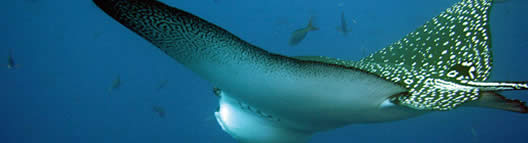
We will visit Espumilla Beach where marine iguanas lounge and the Sally-Lightfoot crabs attract the hunting herons and perform the dance of predator and prey right before your eyes. Snorkeling is highly recommended as you could find yourself face to face with an octopus, moray eel, shark, or a variety of other species of tropical fish.
Buccaneer Cove is a testament to the fact that Santiago Island was once a refuge for British buccaneers. They would anchor in the protected bay to make repairs and stock up on tortoise meat among other things. It is an excellent opportunity to take in the steep cliffs, where hundreds of seabirds perch in front of the dark red sand beach. See if you can spot 'Monk' or 'Elephant' Rock before your guide points them out!
| ESPUMILLA BEACH/BUCCANEER COVE | |
| Possible Activities: | Snorkeling and swimming, short walk along the beach (less than 0.6 mi / 1 km) |
| Difficulty: | Easy |
| Type of Landing: | Wet Landing |
| Highlights & Animals: | Snorkeling, sea birds, historical site, and rock formations. |
The afternoon visit is to a site called Egas Port, also known as James Bay, on Santiago Island. Here, you will enjoy a hike over a dry trail known for being a hang-out for curious Galapagos Hawks and Quick-footed Galapagos Lava Lizards. The trail will then lead you to the coastline where you will visit the gorgeous tide pools and grottos which are full of fauna. You will be able to observe the shy Galapagos fur sea lions. You will also get to snorkel at Egas Port beach.
| EGAS PORT | |
| Possible Activities: | Snorkeling, hike (1.2 mi / 2km) |
| Difficulty: | Easy/Moderate |
| Type of Landing: | Wet Landing |
| Highlights & Animals: | Fur sea lions, Galapagos sea lions, tidal pools and "Grottos", Galapagos Hawk, Oyster Catchers, marine iguanas, and finches. Snorkeling: Reef sharks, turtles, rays, and beautiful underwater formations. |
Day 14 (Friday)
SOUTH PLAZAS & SANTA CRUZ ISLAND: HIGHLANDS
In the morning, you will head to South Plaza Island. This small island with steep cliffs was formed by rising lava and is now covered by Opuntia cacti. It is also home to one of the largest sea lion colonies as well as colorful yellow and red land iguanas. The most characteristic plant is the Sesuvium. During the rainy season its color is a greenish to yellowish tone and in the dry season (end of June through January) a bright red.
| SOUTH PLAZA | |
| Possible Activities: | Hike (1.5 mi / 2 ½ km) |
| Difficulty: | Moderate |
| Type of Landing: | Dry landing |
| Highlights & Animals: | Land iguanas, sea lion colony, Audubon's shearwaters, Swallow-tailed Gulls, Nazca Boobies, and an amazing landscape with cliffs. |
In the afternoon we will visit the Highlands of Santa Cruz where you will walk along a path, observing the hills, ferns, volcanoes, and rich wildlife. This area is home to giant tortoises and also the Tortoise Breeding Center which you'll be able to visit. At the breeding center you will be able to see the tortoises in captivity and possibly interact with them as well! Here they have tortoises from 4 inches to 4 feet long! When the young turtles are old enough they are released into the wild.
| HIGHLANDS | |
| Possible Activities: | Hike (1.5 mi / 2 ½ km) |
| Difficulty: | Moderate (Long) |
| Type of Landing: | Dry Landing |
| Highlights & Animals: | Lava tunnels, interaction with wild turtles, and Tortoise Breeding Center. |
Day 15 (Saturday)
MOSQUERA ISLET - DEPARTURE
Mosquera Islet is located between the islands of Baltra and North Seymour. It is a reef of rocks and coral (the result of an uprising) and a great white sand beach. Its narrowest width reaches about 160 meters and has an estimated length of 600 meters. In most of the perimeter there is a base of lava rocks, as evidence of the lava uprising, except in the southwest side where the landing occurs.
This island has one of the largest populations of sea lions. You can also observe several species of shorebirds. There have been occasional reports at this site of Orcas (Orcinus orca) feeding on sea lions.
| MOSQUERA ISLET | |
| Possible Activities: | Walk |
| Difficulty: | Easy |
| Type of Landing: | Wet Landing (This may be complicated by low tide or when there is heavy swell, during the months of December to March mainly) |
| Highlights & Animals: | Sea Lions, shorebirds |
After this final visit, you will be transferred to Baltra Island's airport in time to catch your flight back to the mainland.
| Important: Itineraries and activities are subject to change without prior notice. Depending on weather conditions and water currents, some wildlife described above may not be visible. |